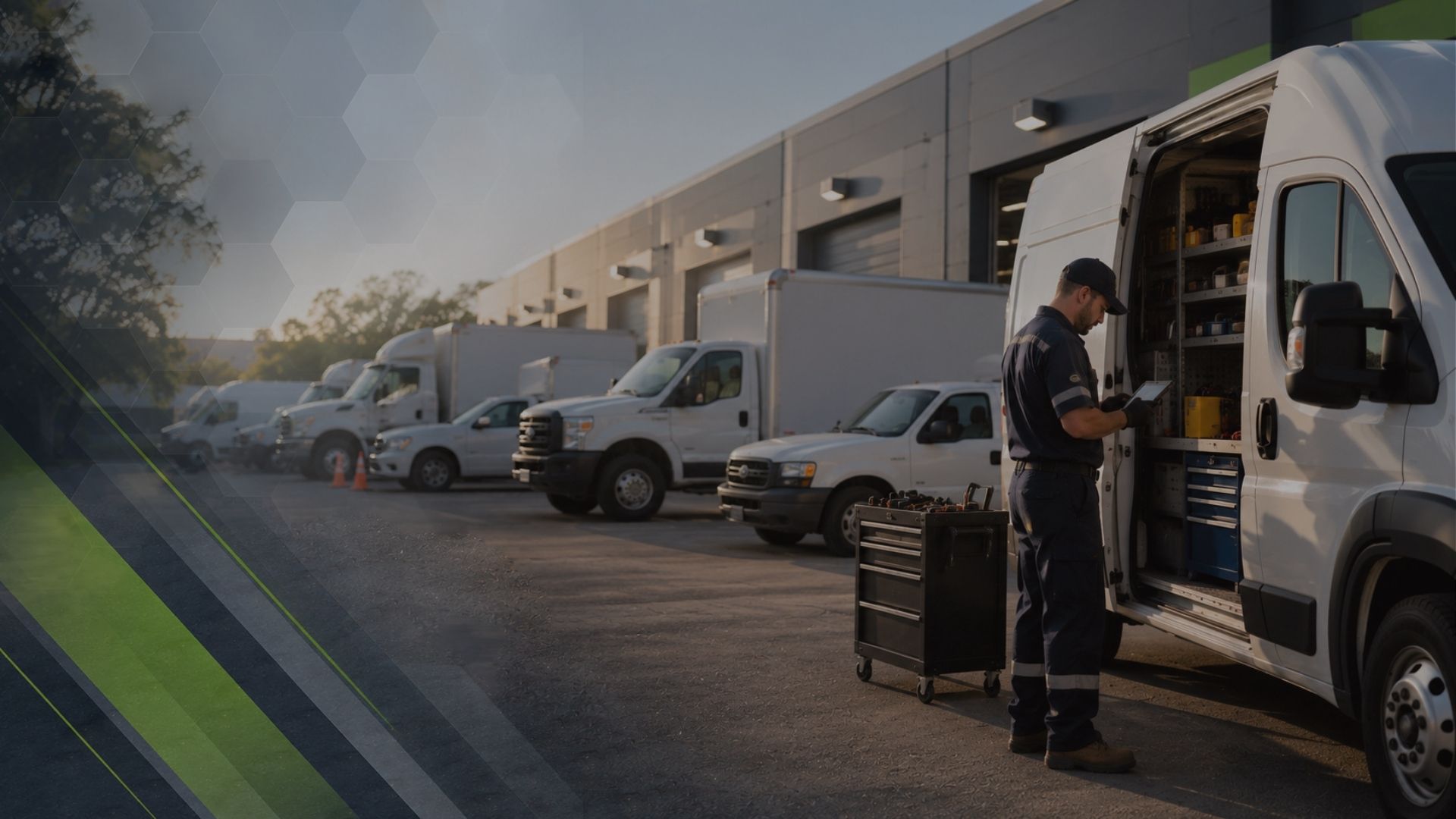
Keeping a commercial fleet ready for work starts with a maintenance process people can follow. Service intervals, driver observations, completed repairs, and the next assignment all need to connect. This collection brings together practical guides for planning preventive work and recognizing the concerns that deserve follow-up.
The right schedule depends on the vehicle and its use. Mileage is one measure, but operating hours, elapsed time, loads, and working conditions can also matter. Begin with the manufacturer's requirements and review them with your maintenance provider. A delivery van, a construction support truck, and a vehicle operating longer routes should not automatically share the same plan.
Build a repeatable maintenance process
Start with our preventive maintenance checklist to organize vehicle records, inspection findings, and scheduled tasks. Give each open concern an owner and make its status visible to dispatch. The purpose is to complete the work and document the result, not simply collect checked boxes.
If your fleet is experiencing repeated concerns, review five signs your fleet needs preventive maintenance. Driver reports, recurring repairs, and gaps in service history can help identify where the process needs attention. A potentially unsafe condition should be assessed promptly rather than left until the next routine appointment.
Choose a service arrangement that fits
The location of maintenance affects coordination as well as cost. Mobile fleet management may support suitable work at an agreed operating location. On-site fleet management may fit operations with regular demand at a facility. Some tasks require a workshop or specialist capability, and the plan should make those handoffs clear.
Before comparing options, identify when vehicles can be released, who provides access, and how findings are approved. Keep all completed work connected to the same vehicle history, regardless of where the service takes place.
Use the guides to plan your next step
The articles below cover maintenance scheduling, service models, and practical inspection processes. Use them to prepare a discussion with your team and provider. If you are rebuilding the program, begin with one vehicle group, confirm the required work, and make sure the reporting process closes the loop.
Contact Prime Fleet Services to discuss your fleet's vehicles, operating locations, and maintenance needs. A clear plan gives drivers, dispatch, and service providers a shared view of what is due and which units are ready.